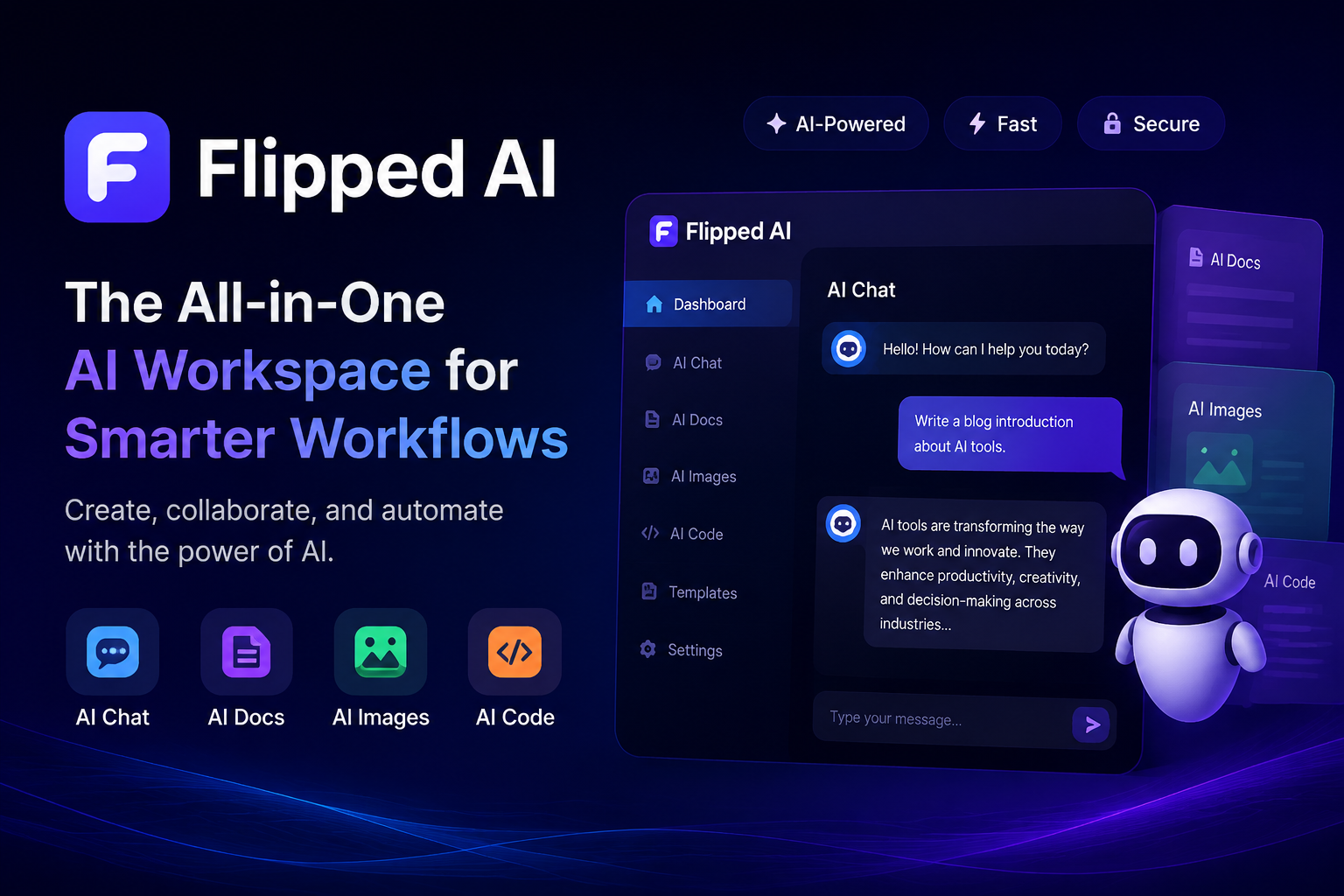
The term flipped ai has gained attention as artificial intelligence continues transforming productivity, communication, business operations, education, and software development. Depending on the context, the phrase may refer to an AI-powered platform, an artificial intelligence tool, or discussions surrounding modern AI applications designed to improve efficiency through automation and intelligent assistance.
As AI technology evolves, users increasingly search for reliable information about available platforms, their capabilities, and practical use cases before adopting new digital solutions.
Flipped AI Quick Overview
| Category | Details |
|---|---|
| Technology | Artificial Intelligence |
| Primary Purpose | AI-Powered Assistance |
| Common Users | Individuals, Businesses, Developers, Students |
| Applications | Productivity, Communication, Automation |
| Industry | Artificial Intelligence |
What Is Flipped AI?
Flipped ai generally refers to an AI-based solution or platform designed to help users complete tasks more efficiently through machine learning, automation, and intelligent data processing. The exact capabilities may vary depending on the platform or service associated with the name.
Many AI-powered platforms aim to simplify workflows by assisting with content generation, communication, organization, analysis, or other digital activities.
Why People Search for Flipped AI
Interest in flipped ai continues growing because artificial intelligence has become part of everyday personal and professional workflows.
Common reasons people research AI platforms include:
- Understanding available features
- Comparing AI tools
- Improving productivity
- Automating repetitive tasks
- Exploring business applications
- Learning about emerging technology
Users often compare different AI services before deciding which solution best fits their needs.
How Artificial Intelligence Works
Although platforms differ, modern AI systems generally rely on several core technologies.
These commonly include:
- Machine learning
- Natural language processing
- Data analysis
- Pattern recognition
- Predictive algorithms
These technologies allow AI systems to process information, identify relationships, and generate useful outputs based on available data.
Common Applications
Many people exploring flipped ai want to understand how artificial intelligence can be applied in daily work.
Popular use cases include:
- Content creation
- Research assistance
- Business communication
- Workflow automation
- Customer support
- Educational support
The flexibility of AI allows organizations and individuals to improve efficiency across many industries.
Benefits of AI Platforms
Modern AI solutions provide several advantages when used appropriately.
Potential benefits include:
- Faster task completion
- Increased productivity
- Better organization
- Improved information access
- Workflow efficiency
- Time savings
The exact results depend on the platform, user goals, and implementation strategy.
Business Use Cases
Businesses continue adopting AI technology to improve operations and customer experiences.
Artificial intelligence may support:
- Administrative tasks
- Marketing activities
- Customer communication
- Data reporting
- Document processing
- Project management
Many organizations use AI as a tool to assist employees rather than replace professional expertise.
AI in Education
Educational institutions increasingly explore artificial intelligence to support both students and educators.
AI applications may include:
- Personalized learning
- Research assistance
- Educational content creation
- Administrative support
- Language learning
- Academic organization
Responsible implementation remains important to ensure educational integrity and effective learning outcomes.
Responsible AI Usage
As AI adoption grows, responsible use becomes increasingly important.
Good practices include:
- Verifying AI-generated information
- Protecting personal data
- Respecting copyright
- Reviewing generated content carefully
- Using AI as a supportive tool
Human judgment remains essential when making important academic, business, or professional decisions.
Why AI Continues Growing
The growing interest in flipped ai reflects the rapid expansion of artificial intelligence across nearly every industry.
Organizations continue investing in AI because it can help improve efficiency, automate repetitive work, support decision-making, and provide valuable assistance across many professional environments.
As technology advances, AI platforms are expected to become even more capable while supporting a wider range of personal and business applications.
Challenges When Using AI Platforms
While artificial intelligence offers many advantages, users should also understand its limitations. Discussions about flipped ai often include the importance of reviewing AI-generated results rather than relying on automated outputs without verification.
Some common challenges include:
- Incorrect or outdated information
- Limited understanding of complex situations
- Privacy considerations
- Bias in generated content
- Need for human review
Using AI responsibly helps improve the quality and reliability of results.
Best Practices for Using AI Tools
People exploring flipped ai can benefit from following practical guidelines that improve both efficiency and accuracy.
Recommended practices include:
- Write clear prompts.
- Review generated responses carefully.
- Verify important facts with trusted sources.
- Protect confidential information.
- Use AI to assist rather than replace professional judgment.
These habits help users achieve better outcomes while reducing potential errors.
AI Across Different Industries
Artificial intelligence is no longer limited to technology companies. Today, AI supports organizations across many sectors.
Common industries using AI include:
- Education
- Healthcare
- Finance
- Marketing
- Customer service
- Manufacturing
- Retail
The continued expansion of AI demonstrates its growing importance in modern digital transformation.
Future of Artificial Intelligence
The future of AI is expected to focus on greater accuracy, improved automation, stronger security, and more personalized user experiences.
Future developments may include:
- Smarter virtual assistants
- Enhanced business automation
- Better language understanding
- Improved collaboration tools
- More efficient data analysis
As technology advances, platforms associated with flipped ai and similar AI solutions may continue expanding their capabilities to meet changing user needs.
Why AI Literacy Matters
Understanding how artificial intelligence works is becoming an important skill for students, professionals, and businesses.
Learning about AI helps people:
- Make informed technology decisions
- Evaluate AI-generated information
- Improve workplace productivity
- Adapt to changing industries
- Use digital tools responsibly
AI literacy supports better decision-making as intelligent technologies become increasingly common.
Explore More AI and Technology Guides
If you are researching flipped ai, visit latitudea.com for informative articles covering artificial intelligence, technology, business, productivity, software, digital innovation, and emerging technology trends. Editoriala.com provides practical resources designed to help readers better understand modern AI tools and the technologies shaping today’s digital world.
Final Thoughts
Interest in flipped ai reflects the growing role of artificial intelligence in everyday work, education, and business. AI-powered platforms continue helping users automate tasks, organize information, improve productivity, and support decision-making across a wide range of industries.
While AI offers significant advantages, users should combine intelligent technology with critical thinking, careful verification, and responsible digital practices. Understanding both the capabilities and limitations of AI allows individuals and organizations to make the most of these rapidly evolving technologies.
Frequently Asked Questions
What is Flipped AI?
Flipped ai generally refers to an AI-powered platform or technology that uses artificial intelligence to assist users with various digital tasks and workflows.
What can Flipped AI be used for?
Depending on the platform, it may support content creation, research, communication, automation, productivity, and business-related activities.
Is Flipped AI suitable for businesses?
Many AI platforms are designed to improve efficiency, automate repetitive work, and assist business operations across different industries.
Can students use Flipped AI?
Students may use AI tools for research assistance, organization, learning support, and educational productivity while following academic integrity guidelines.
Does AI always provide accurate information?
No. AI-generated responses should always be reviewed and verified, especially when accuracy is important.
Is AI replacing human professionals?
AI is generally used to assist people by improving efficiency and supporting decision-making rather than replacing professional expertise.
Why is artificial intelligence becoming more popular?
AI helps individuals and organizations automate routine tasks, improve productivity, analyze information more efficiently, and support innovation across many industries.